




To compete in e-commerce and omnichannel retail, packaging must arrive intact, delight customers and meet retailer requirements. Testing and quality assurance minimizes damages and returns, meets sustainability goals and strengthens brand trust — boosting your bottom line.
Why Does Testing and Quality Assurance Matter for Packaging?
Today’s packages must meet increasingly high customer expectations. Testing and packaging quality assurance provide the data and discipline to consistently protect products and your reputation.
The key reasons to invest in testing and QA today:
- Reduce damage-driven returns and total landed cost by proving designs before scale.
- Build customer trust and repeat purchases by ensuring products arrive in perfect condition.
- Meet retailer and e-commerce requirements to avoid compliance fees.
- Optimize packout, materials and cube use to lower freight and labor costs.
- Create a continuous improvement loop where field data informs design tweaks and revalidation.
ISTA Protocols and Tests
A structured packaging test program significantly increases the number of product packages that will withstand real-world distribution hazards and reach their destinations intact.
The International Safe Transit Association has developed globally recognized transit testing standards to demonstrate that packaging can effectively protect products during distribution. The goals are to reduce damage and returns, control costs and use materials efficiently with well‑designed packaging.
ISTA 1 Series
These non-simulation integrity tests provide a quick and cost-effective screen of the product/package combination to gauge durability. These procedures apply fixed, repeatable stresses that don’t attempt to replicate a full distribution environment. Instead, they are ideal for early design checks, benchmarking and comparing alternatives before investing in more complex simulations.
Use ISTA 1 to find obvious weaknesses, establish a baseline and guide your initial product protection packaging methods.
ISTA 3 Series
General simulation tests introduce lab simulations of real transport conditions, including random vibration profiles with and without top load, structured drop sequences and defined handling events. These tests help teams verify that packaging can withstand parcel and less-than-truckload hazards. The aim is to reveal issues with bracing, blocking, void fill and component fit that might not surface in basic screens.
Use ISTA 3 when you need distribution-relevant confidence for e-commerce and mixed-mode shipping, without tying testing to any single retailer’s program.
ISTA 6 Series
Member-specific performance tests include protocols created with or by specific retailers and carriers — for example, Amazon Ships in Own Container. These procedures often include distinct vibration profiles, drop sequences and documentation aligned to that channel’s expectations.
Use ISTA 6 when your packaging must meet a partner’s defined standard to reduce damage risk, support compliance and deliver a consistent customer experience.
How to Apply Packaging Quality Assurance
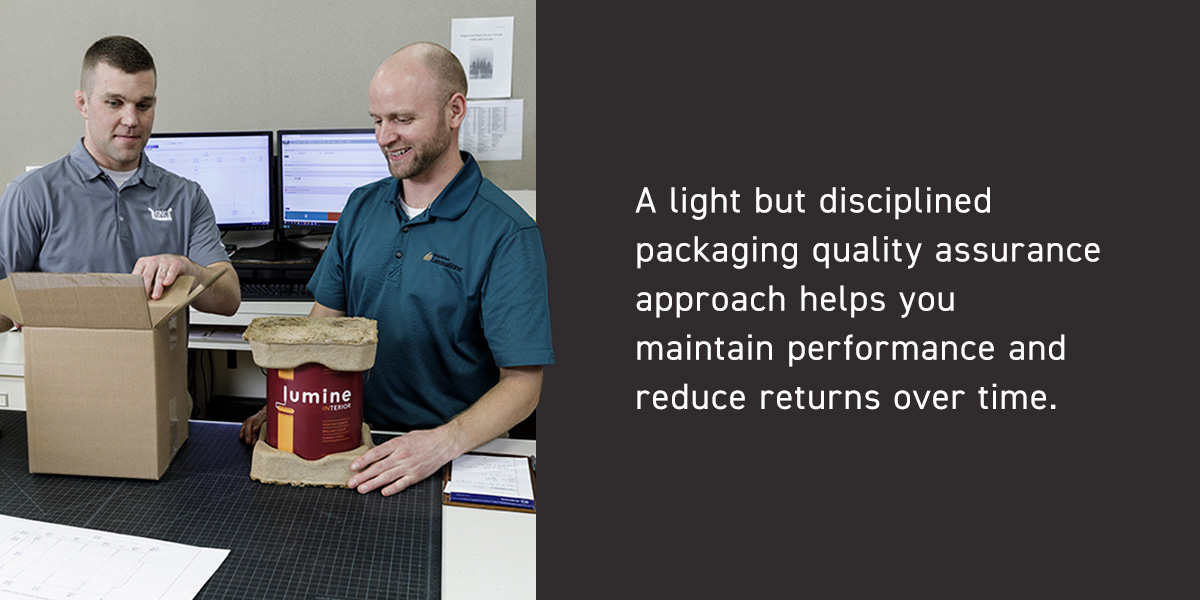
Testing isn’t a one-time event. A light but disciplined packaging quality assurance approach helps you maintain performance and reduce returns over time. Use the steps below to structure your secure packaging program.
Step 1: Outcomes and Metrics
Start by defining what success looks like and how you’ll measure it. Set targets for damage-related return rates, defect parts per million and packaging costs per shipment.
Next, establish acceptable quality limits for incoming materials and finished packouts to control variation before issues reach customers. Then, close the loop by tracking customer-impact indicators like net promoter score and customer satisfaction related to delivery conditions and unboxing feedback.
This step translates lab performance into real-world experience and brand trust.
Step 2: Testing Intensity
Classify stock-keeping units by:
- Weight
- Fragility
- Presence of liquids
- Irregular geometries
- Fulfillment channel
Use these profiles to assign the appropriate ISTA path, using ISTA 1 for early integrity screening, ISTA 3 for distribution‑relevant simulation and ISTA 6 when a sales channel requires a member‑specific protocol.
For heavier items or multi‑unit shipments, layer in unit‑load evaluations by testing pallet configurations, stacking and compression to confirm the stability and resilience of your secure product packaging solutions through the last mile.
Step 3: Inspection and Sampling
Build control into production with disciplined testing. Start with golden samples and first‑article checks to lock the standard before scaling. Ensure every line and site is aware of your standards.
Step 4: Close the Loop
Turn insights into durable fixes with a structured corrective action cycle. Start with a root‑cause analysis on every test failure or field damage report to pinpoint the actual weak point or failure. Implement targeted corrective actions.
These could be:
- Adjusting insert thickness
- Refining clearances
- Upgrading corrugate grade
Retest quickly to verify the improvement, then formalize the change by updating standard operating procedures and work instructions for a sustainable solution across lines and sites.
Step 5: Continuous Improvement
Entrust your team to validate changes before rolling them out. Hold monthly cross‑functional reviews of damage data, return reasons and freight exceptions to spot trends and prioritize fixes. Regularly revisit cube and weight optimization to cut materials and shipping costs without compromising protection.
Finally, document and share official policies and best practices in a central training manual for consistency.
What Are the Best Sustainable, Secure Packaging Options?
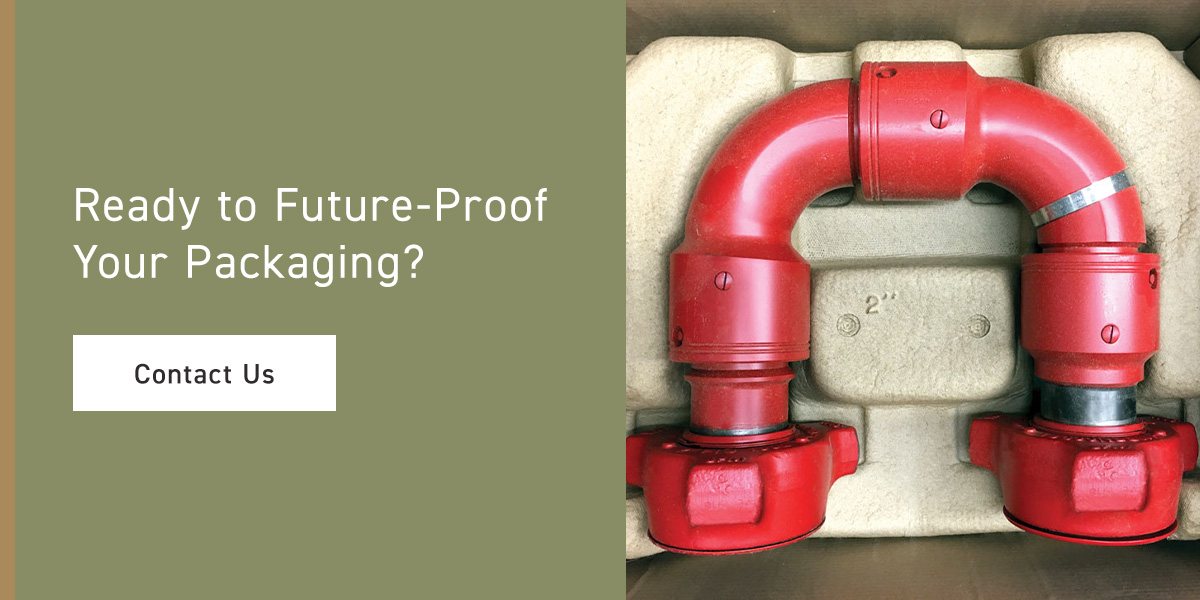
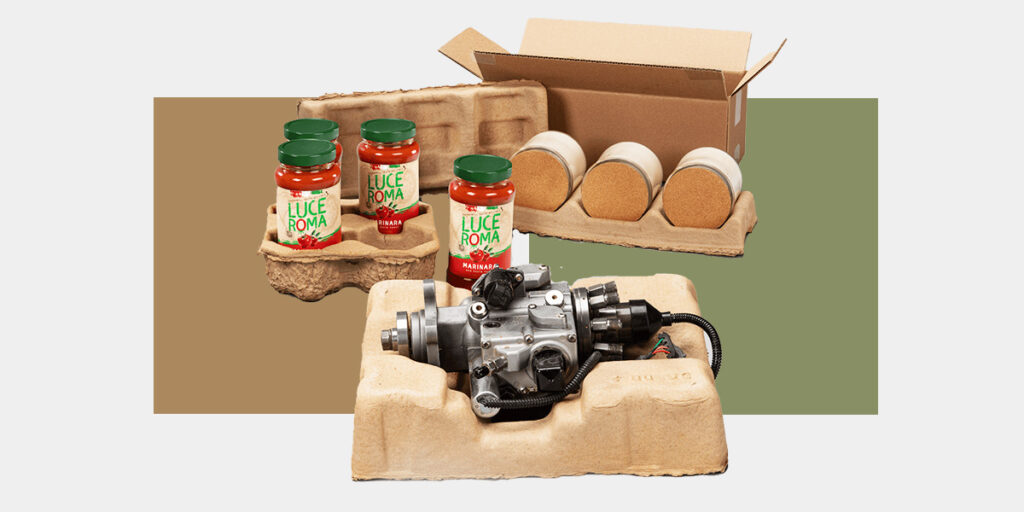
Sustainability and security can complement each other. Molded fiber inserts are an option that delivers lab-validated protection and eco-friendly benefits.
- Custom-fit protection: Tailored to the product to cushion, brace and block for reliable in‑transit stability.
- Drop-and-go efficiency: No assembly, fewer components and faster packouts to reduce labor time and variance.
- Compression strength: Engineered for strong support, including heavier items when properly designed and validated.
- Space and freight efficiency: Nestable parts save warehouse space and a lighter weight can reduce shipping costs.
- Curbside recyclability: Paper-based and biodegradable materials simplify disposal and improve customer experience.
- Broad applications: From glass jars and beauty items to tools and light industrial, molded fiber is a versatile, secure product packaging solution.
- Lab-validated performance: ISTA 1, 3 and 6 testing can refine fiber inserts to meet e-commerce and retailer expectations.
Partner With Great Northern Fiber Interior Packaging’s Lab
Knowing when to test and how to prepare helps you move fast and avoid costly trial and error in the field.
Signs it’s time to test with Fiber Interior Packaging:
- Expanding into Amazon or parcel channels that require SIOC and Frustration‑Free Packaging validation.
- Noticing a spike in damage-related returns, freight claims or negative delivery feedback.
- Launching a new product, changing materials or altering the packaging bill of materials.
- Pursuing cost-reduction or sustainability goals that require design or materials changes.
What to bring and expect for an efficient test cycle:
- Representative products, proposed packaging components and current failure data.
- ISTA target standards, channel requirements and any retailer-specific expectations.
- Concrete, measurable objectives, whether passing SIOC, reducing breakage by a specific percentage or eliminating extra void fill.
- Collaboration on design refinements, followed by rapid retests to confirm changes.
Recommended next steps to accelerate packaging quality assurance:
- Prioritize your top-volume or highest-risk SKUs for immediate validation.
- Align on test plans that reflect your shipping realities, whether weight tiers, liquids or palletization.
- Use test results to lock SOPs and scale a packaging quality assurance playbook across your catalog.
Ready to Future-Proof Your Packaging?
The most successful packaging solutions begin with perfecting testing and quality assurance. They continue with validation — ensuring your packaging reduces returns and meets e-commerce demands.
Let our CPLP-certified technicians at Great Northern Fiber Interior Packaging map an ISTA 1/3/6 sequence for your products, pressure-test your current packages and recommend fast, practical design improvements.
Contact us today to learn more about our capabilities and process.