





Key Takeaways
- Sustainable packaging for consumer goods helps brands meet retailer sustainability requirements.
- Molded fiber interior packaging in co-packing operations can provide a 100% curbside recyclable solution.
- This solution reduces product damage, saves on labor costs and satisfies Amazon and major retailer standards.
- Fiber packaging offers beauty, cosmetics and household goods brands a strategic path to compliance while improving operational efficiency.
As retailers continue to tighten their sustainability requirements, many brands are relying on co-packers to fulfill their orders. The specific type of protective packaging used in this scenario directly impacts the products, efficiency and reputation of your goods brand.
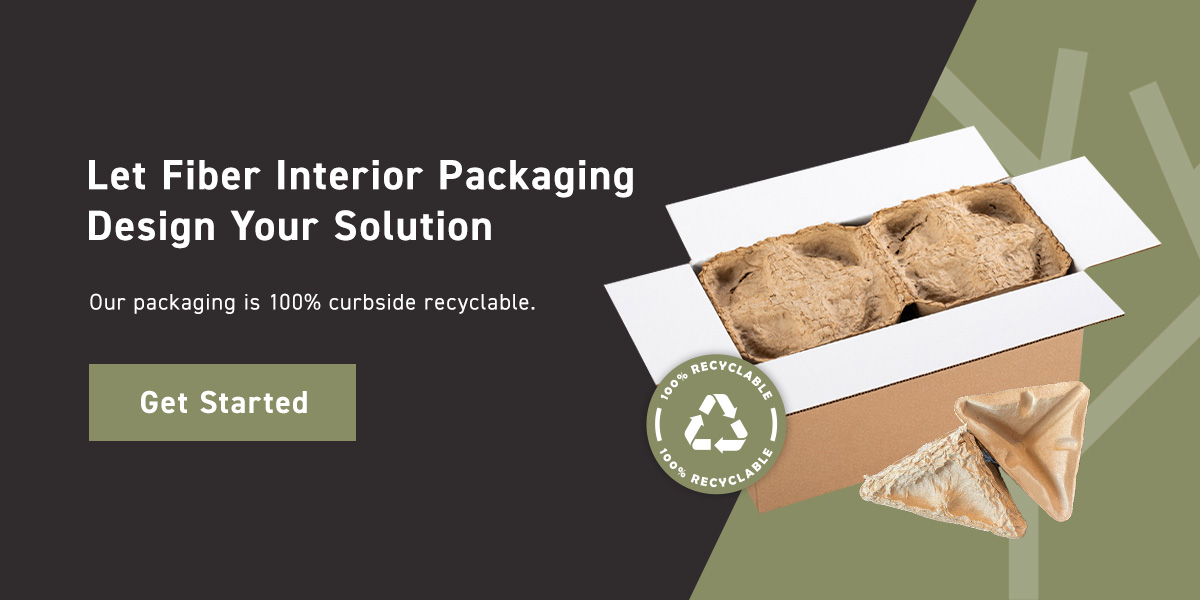
Fiber packaging solutions provide safe, sustainable packaging for consumer goods. They offer an alternative to foam, airbags and packing peanuts. This protective interior packaging is 100% curbside recyclable, custom-molded to fit your products and designed to reduce damage in transit.
How Fiber Packaging Meets Retailer Requirements
The gap between consumer expectations and the daily realities of retail is narrowing. Globally recognized companies, including Amazon, Walmart, Target and CVS Health, have formally joined forces to accelerate the shift to more sustainable packaging.
Businesses can meet retailer sustainability demands, reduce in-transit damage and reduce labor hours on the co-packing line by choosing molded fiber interior packaging. This solution offers multiple benefits.
- Fully curbside recyclable
- Custom-molded to fit each product
- Drop-and-go ready with no assembly required
The Packaging Compliance Landscape
Sustainable packaging demands come from multiple directions, including retailers and regulators. Consumer goods brands should consider how this landscape influences their strategic packaging decisions.
Retailer Sustainability Requirements
Retailers are increasingly coming under scrutiny to provide sustainable retail packaging solutions, creating opportunities to relieve this pressure by using eco-friendly packaging for consumer products.
Despite having 82% of its global private-brand plastic packaging designed for recycling, Walmart has acknowledged that it hasn’t currently met its greenhouse gas emissions targets.
Target has expressed a commitment to ensuring 100% of its in-house brand packaging is recyclable, compostable or reusable. It’s a goal that the brand is still working to achieve by partnering with brands to eliminate non-recyclable materials from their supply chains.
Amazon Packaging Standards
Amazon’s Frustration-Free Packaging Tier 1 program requires recyclable, protective packaging that can ship without an Amazon overbox. Meeting that standard means verifying your packaging retains its integrity against in-transit drops, vibration and compression with ISTA 6 packaging testing.
As a member of Amazon’s Packaging Support and Supplier Network, Great Northern Fiber Interior Packaging supports FFP standards and offers in-house ISTA 6 testing upon request, providing your brand with a strategic and direct path to certification.
Non-certified packages that exceed specific size and weight thresholds can trigger Amazon chargeback fees, so getting this right is as much a financial decision as a compliance one.
EPR Laws and the National Regulatory Shift
As of October 2026, a total of seven U.S. states now have comprehensive packaging EPR laws:
- California
- Oregon
- Colorado
- Maine
- Minnesota
- Maryland
- Washington
These state requirements have nationwide implications in many instances. For example, California SB 54 permanent regulations apply to any company selling packaged goods in California, not just California-based brands. This regulation requires (by 2032):
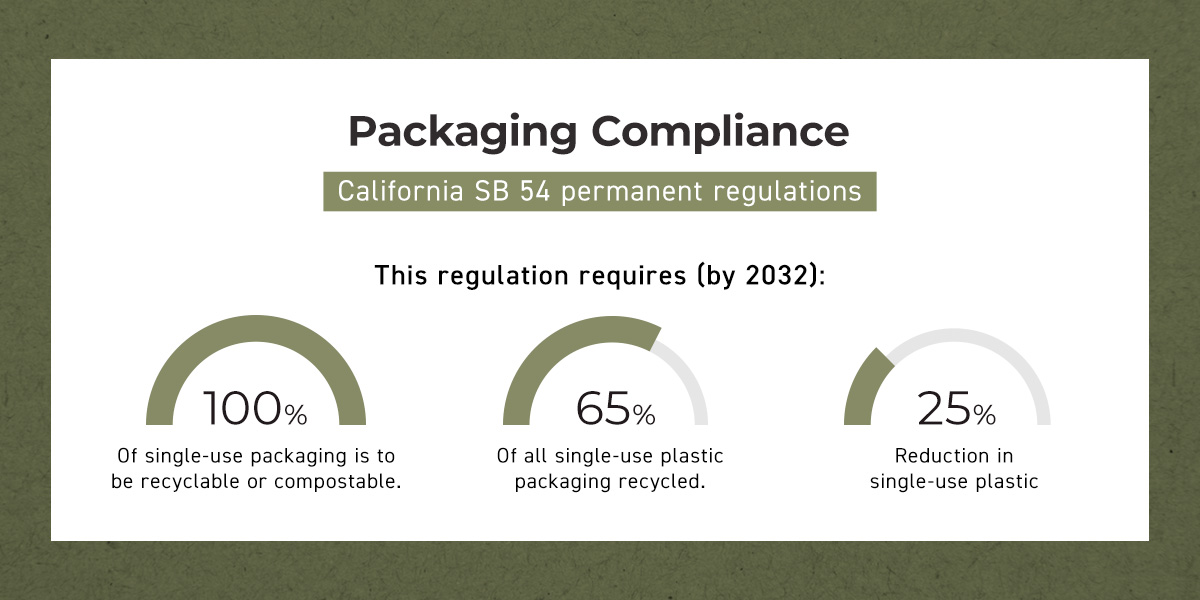
- 100% of single-use packaging is to be recyclable or compostable
- Recycling 65% of all single-use plastic packaging
- 25% reduction in single-use plastic
Full program implementation is set to begin in 2027, with penalties of up to $50,000 per violation per day for noncompliance. SB 54 will apply to virtually any brand with national Amazon or major retail distribution. Choosing sustainable packaging for your consumer goods now provides your business with a strategic advantage by helping it meet these mandates.
Fiber Packaging Across Consumer Goods
There are many types of molded fiber packaging available, all purpose-built to protect products across a wide range of consumer goods categories.
Beauty and cosmetics brands face a range of challenges when shipping through a co-packer, such as:
- Fragile glass containers
- Pump-top dispensers
- Multi-component gift sets
These products are high-value and damage-sensitive. Molded fiber packaging for cosmetics holds each product securely, reducing the likelihood of shifting, compression or shattering in transit.
Household products tend to be heavier, bulkier and irregularly shaped, making conventional void-fill solutions, such as airbags and packing peanuts, less effective. Thanks to thoughtful engineering, molded fiber can protect products from palm-sized to pallet-sized, weighing 100 pounds or more.
Customized packaging options can also include nestable or stackable designs, saving floor space and reducing labor costs by enabling more efficient operations during the warehousing stages of the supply chain.
Fiber packaging is versatile enough to benefit the full spectrum of consumer goods, including candles, health supplements, glass jars and sauces. Knowing the full range of protective packaging applications is a critical component of creating a more sustainable and retail appealing packaging strategy.
Co-Packing Operational Benefits
Sustainable molded fiber packaging for e-commerce goods meets sustainability requirements and saves businesses money at multiple points in the supply chain.
- Faster pack-out: No assembly means fewer labor hours for each order.
- Less training time: The drop-and-go design of fiber packaging means training time at the co-packing line is minimal.
- Reduced storage costs: Nestable parts can reduce warehouse storage costs across your entire product range.
- Damage prevention: Increased product protection can lead to fewer customer return issues.
- Fewer replacements: Reduced customer escalations also contribute to fewer replacement shipments.
Frequently Asked Questions
Looking for more information about eco-friendly packaging for consumer products? Use these answers to guide your packaging decisions.
Start with interior protective packaging, which is eco-friendly and moves quickly through the supply chain. You can also specify 100% curbside-recyclable materials in your co-packing agreements so your co-packer uses them consistently.
Molded fiber from Fiber Interior Packaging is fully curbside-recyclable, and ISTA testing is available upon request. Learn more about Fiber Interior Packaging’s approach to sustainability if your sustainability team wants to fulfill Amazon FFP requirements.
The custom fit is the leading differentiator. Unlike generic foam blocks, airbags or packing peanuts that leave products room to shift, molded fiber matches a product’s exact dimensions, thus reducing damage in transit.
Fiber Interior Packaging’s solutions demonstrate this positive impact, with reports of customer damage rates dropping from 70% breakage to 99% success after switching.
Molded fiber is an eco-friendly choice for e-commerce interior packaging because it’s recyclable, custom-fit to reduce damage, requires no assembly for labor efficiency and meets Amazon’s sustainability standards for compliance.
Let Fiber Interior Packaging Design Your Solution
Ready to give your co-packer the packaging that protects your products and satisfies retailer sustainability requirements? Tell us about your product, and we’ll design a custom-molded fiber solution your co-packer can use. Our packaging is 100% curbside recyclable and requires no assembly in most cases.
No matter what your packaging needs are, reach out to our team to get started.